Culinary operations · Systems · Product
I design the systems behind exceptional kitchens.
Great food shouldn't depend on chaos, memory or heroics. I'm Ciarán Keogh — a chef, operational leader and systems designer with about 25 years across hospitality, spanning five-star resort kitchens, premium events, private service, high-volume production and chef-first digital products. I make complex culinary operations easier to execute, easier to evidence and easier for people to work in.
Or take the documentsCurriculum vitae (PDF)Capability statement (PDF)
Ireland · New Zealand · CanadaFive-star to high-volumePremium events · private serviceChef-first product design
Straight to it
Proof at a glance
The operating range, stated exactly as the evidence supports it.
Personal results and culinary roles come from employment records, CV material and a signed Whistler reference. The separate 100,000-meal facility remains documented in the career and case-study evidence rather than being used as a headline proof tile.
Full operating range
From production scale to microscopic precision.
My career has deliberately crossed environments that are rarely combined in one person: classical resort cooking, opening teams, mountain hospitality, major venues and elite sport, performance nutrition, premium private catering, multi-site production and chef-first digital product development.
The reason that range matters is that the same problem recurs at every point on it. The people, the volumes and the standards change; the need for the right information to reach the right person at the right moment does not.
Production scale
Thousands of covers, several sites and one central kitchen. Nothing survives here on individual memory.
- Victoria University · 5,000+ daily covers across 7 halls of residence
- Whistler Blackcomb · Up to 1,500 covers/day at peak
- Venues Ōtautahi / Vbase · plated dinners to 1,350 guests
- NOSH · plated to 350 covers, canapé to 1,500 guests
Single-plate precision
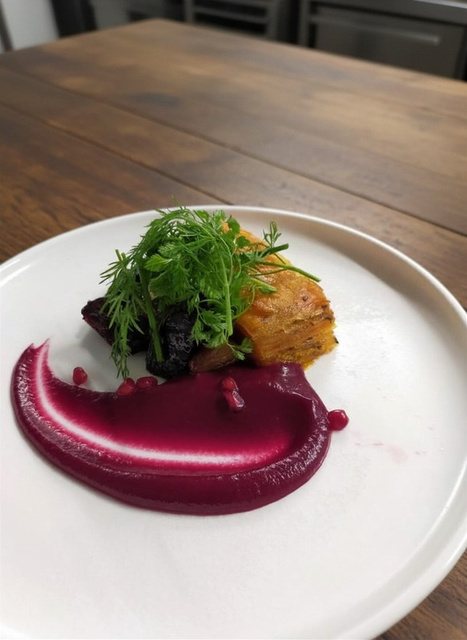
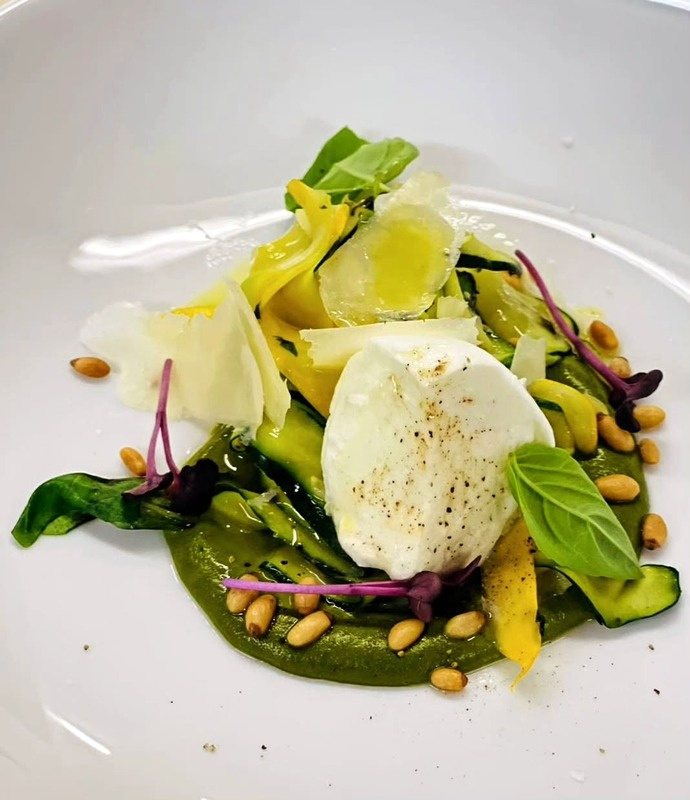
One guest, one preference, one plate. The standard is exact and the margin for visible failure is close to zero — whether that is a private event for a resort's premium clients or a single plate at anchor.
- Classical foundations in a five-star Irish resort environment
- Seasonal and locally led cooking at Avoca and Alta Bistro
- Michelin-recognised gastropub experience in Dublin
- VIP, athlete, private-service and current yacht work
Balanced operation · systems connecting volume to standards
Culinary record
The systems work sits on top of a long cooking career.
Classical foundations, opening teams, resort kitchens, major events, performance nutrition, private service and high-volume production.
Before the diagrams, databases and tools, I spent years learning how food actually fails under different conditions: one plate, twelve hundred plates, a mountain restaurant, a temporary event kitchen, a private home or a satellite site. The systems work grew out of having to deliver in all of them.
Repeated exactly, hundreds of times
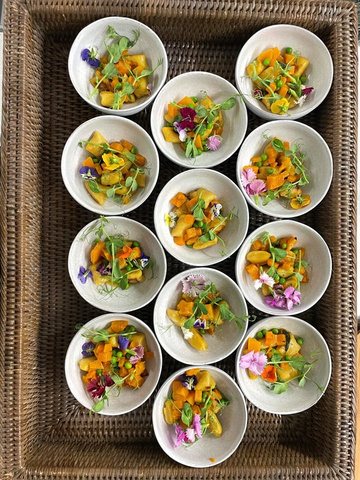
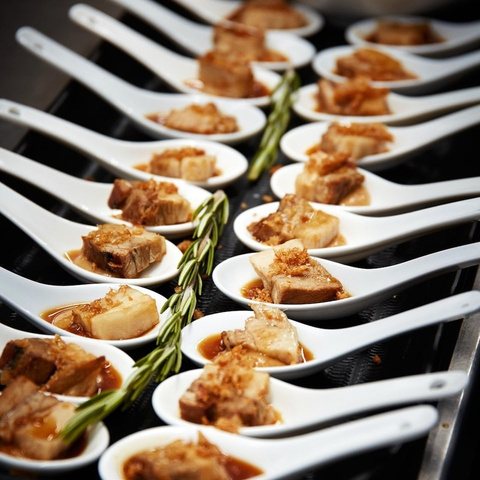
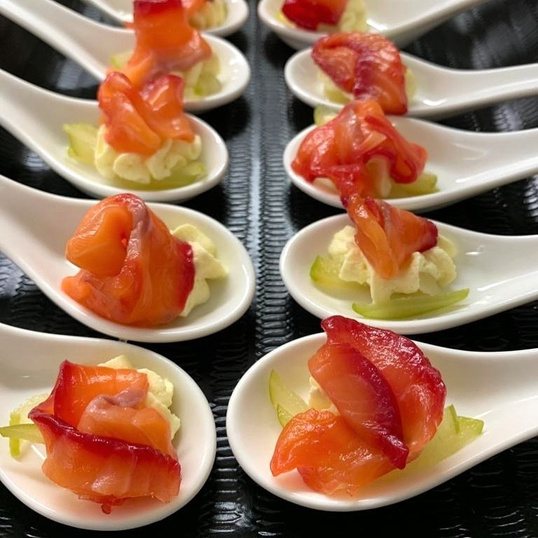
Made once, for one person
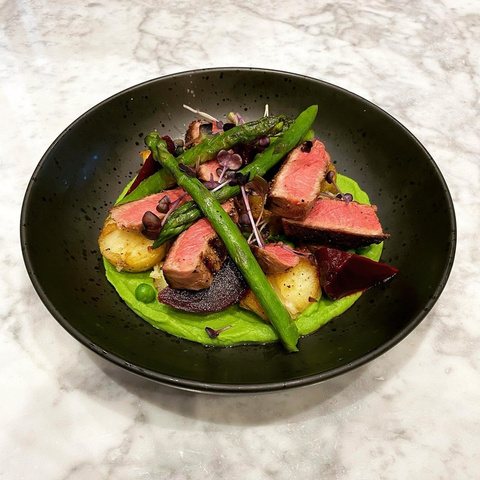
Ireland · craft
Druids Glen → Avoca → The Chophouse
Classical foundations in a five-star championship resort; opening team at Avoca Monkstown; later Christmas service in a Michelin-recognised Dublin gastropub.
Whistler · pressure
Whistler Blackcomb + Alta Bistro + Brewhouse
A peak resort operation of up to up to 1,500 covers/day alongside modern seasonal alpine cooking and a busy village brewpub.
Christchurch · scale
Vbase / Venues Ōtautahi
Plated dinners to 1,350 guests, touring-artist and VIP catering, elite sport and satellite kitchens across major city venues.
Christchurch · performance
IHF Health Club
Opened the kitchen and built the food offer around daily service and performance nutrition. The club was later named 2022 Independent Facility of the Year.
Wellington · premium
NOSH
Private and corporate catering across changing venues, from intimate dinners to three-course plated service for 350 covers and canapé service for 1,500 guests, with the highest available food-safety audit grade achieved within a month of starting.
Now · precision
Yacht / private service
A deliberate final extension of the operating range: privacy, personalisation, constrained environments and exact single-guest standards.
What changes
Four outcomes matter when the system makes sense.
Financial performance, compliance, employee confidence and the food itself are connected operational outcomes.
Financial control
Forecasting, purchasing, labour, portioning and waste become visible early enough to act on. At Whistler Blackcomb, the team I helped lead finished first in the food-and-beverage division across financial, guest and staff measures in the same season.
Measured result at Whistler · employer figures remain private
Compliance by design
HACCP, traceability, allergen controls and batch records work best when the record is created by the work itself. A control reconstructed at shift end is weaker than one built into the handover.
Documented operational requirement across senior roles
Employee experience
Clear standards reduce guesswork, repeated questions and dependence on whoever remembers the old way. The same Whistler season produced a record 93 staff satisfaction score.
93 measured at Whistler · wider effects not universally measured
Culinary consistency
Structure should protect judgement where judgement matters and remove it where it only creates variance. The system gets the dish to the far end correctly; the chef still gets to cook.
Recurring pattern across resort, event, private and multi-site service
Case study · Multi-site production
Complexity made usable.
Across high-volume and multi-site operations, I have worked on production flows, forecasting, SOPs, digital batch tracking, volume ordering, traceability and team standards.
The recurring problem was rarely a lack of effort. It was unclear information, fragmented ownership and too much dependence on experienced individuals remembering everything.
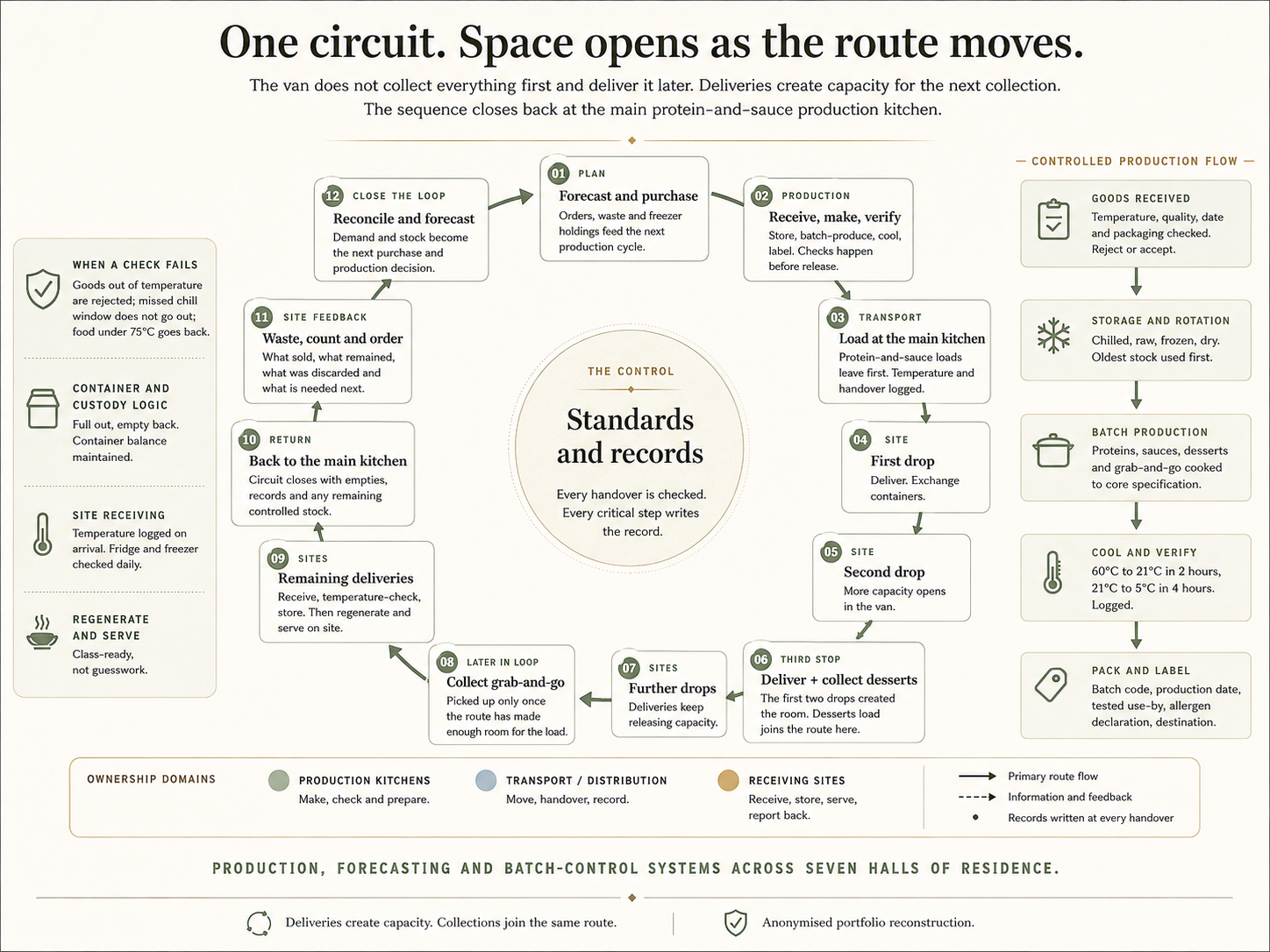
At Victoria University that meant rebuilding seven halls of residence from seven kitchens each cooking independently into three specialised production kitchens feeding the operation, with a distribution network and a regeneration system so the food arrived and finished correctly at the far end.
It began as a daily email and became a standard. The role brought two Star Awards in 2024 and promotion to Culinary Development Lead, and the transferable parts of the system were then adapted across the wider sector.
System design · Work in practice
The last five metres matter.
Regeneration, assembly and service have to be designed as part of the original production system.
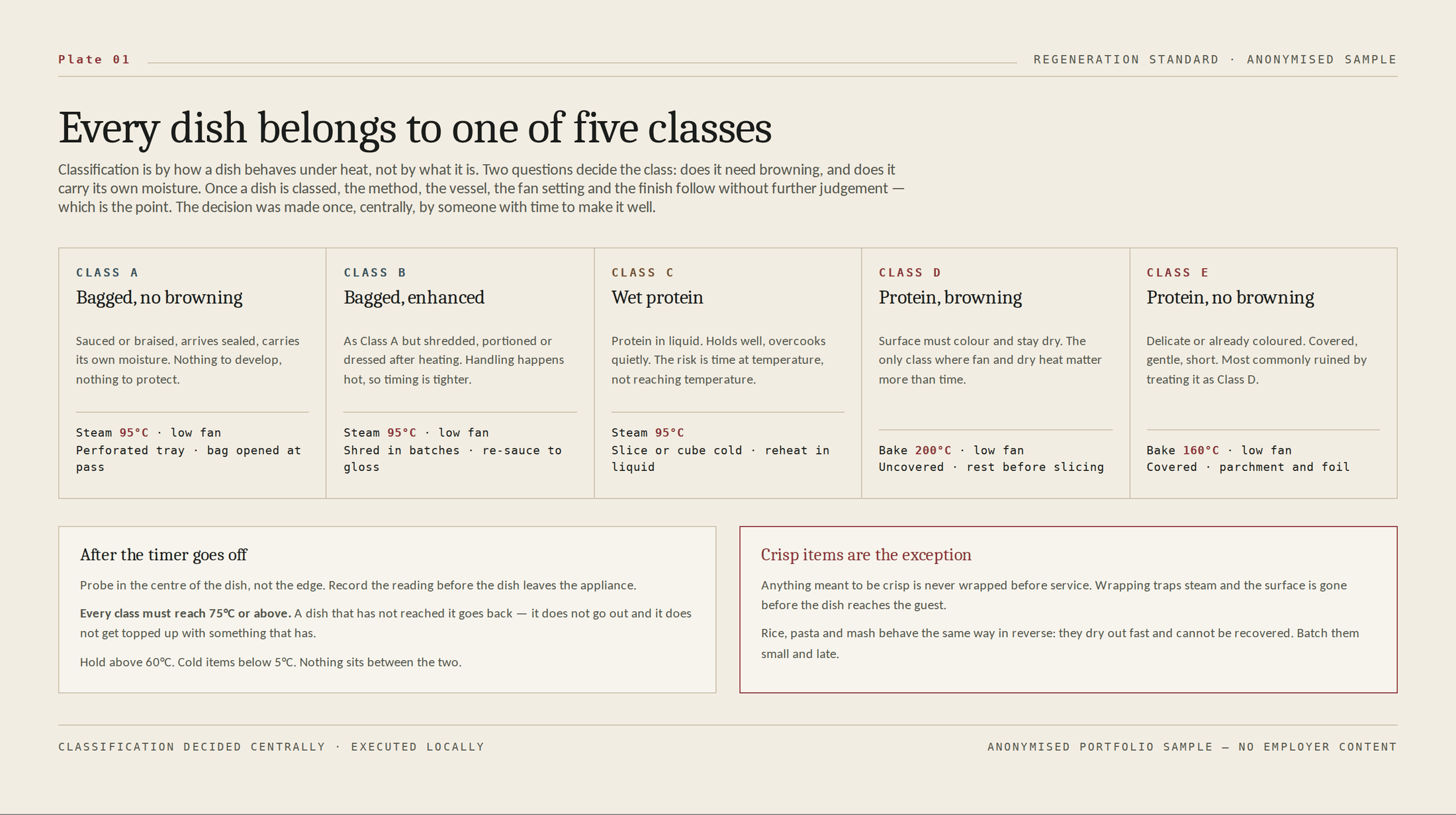
A production system can be technically correct and still fail at regeneration, assembly or final service.
Several hundred dishes were reduced to five classes, decided by two questions: does it need browning, and does it carry its own moisture. Method, vessel, fan setting and finish follow from the class.
The point was to move the decision upstream. Nobody makes a good call about fan settings at the pass with a queue forming, so the call was made once, centrally, by the person who developed the dish.
And it is specified per site rather than issued to it. The classification and the controls are fixed; the level of detail, the vocabulary, the equipment named and the way it looks are all set from who will be reading it.
Culinary knowledge systems
A working reference became a culinary product.
What began as a compact Chef's Bible developed into a yacht-aware Galley Bible, then the search-first Fond, and finally The Spicy Noodle. Eight preserved builds, each asking a harder question than the last — including the two that got too broad.
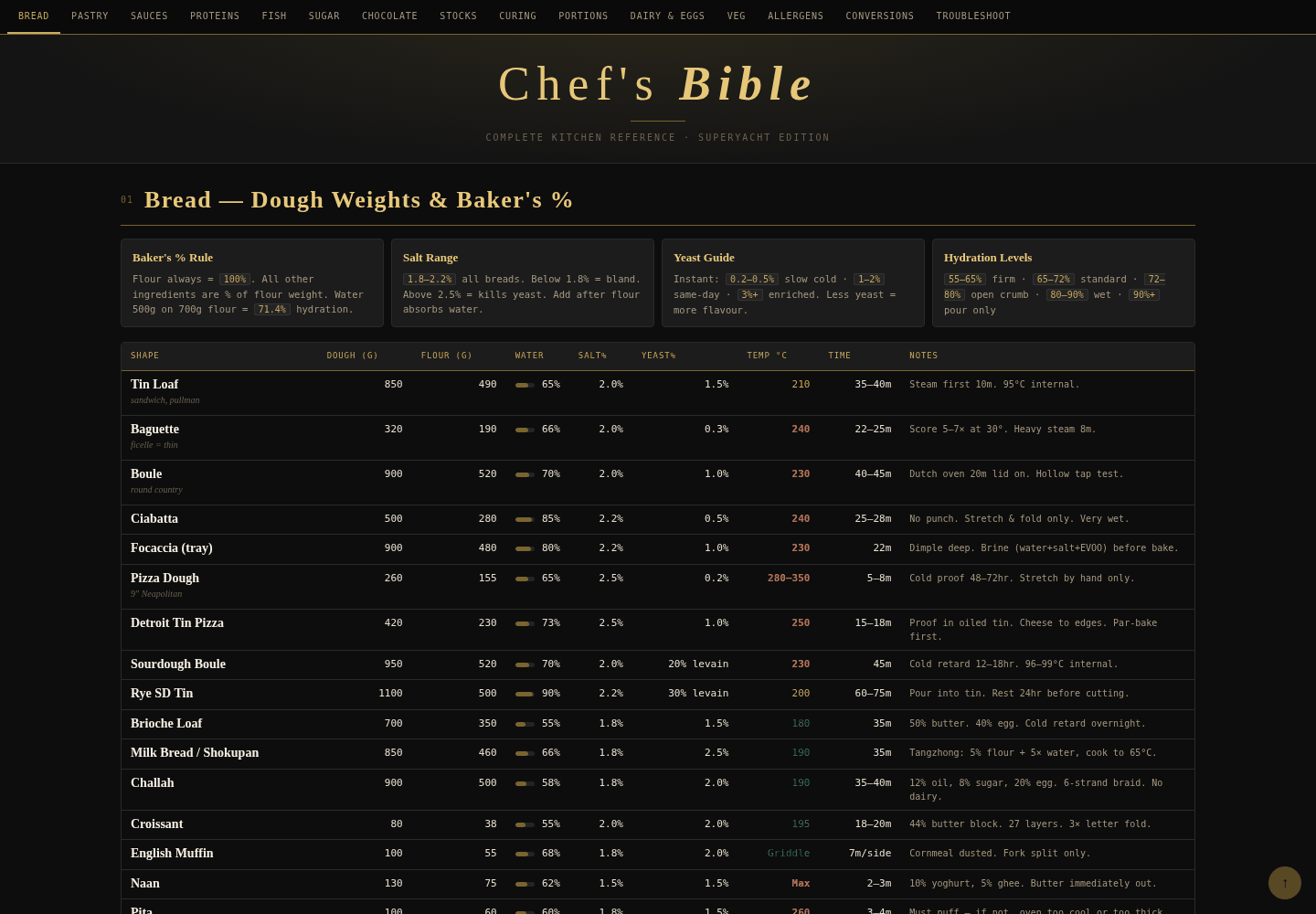
Chef's Bible
What must a working chef remember?
Gains: Capture
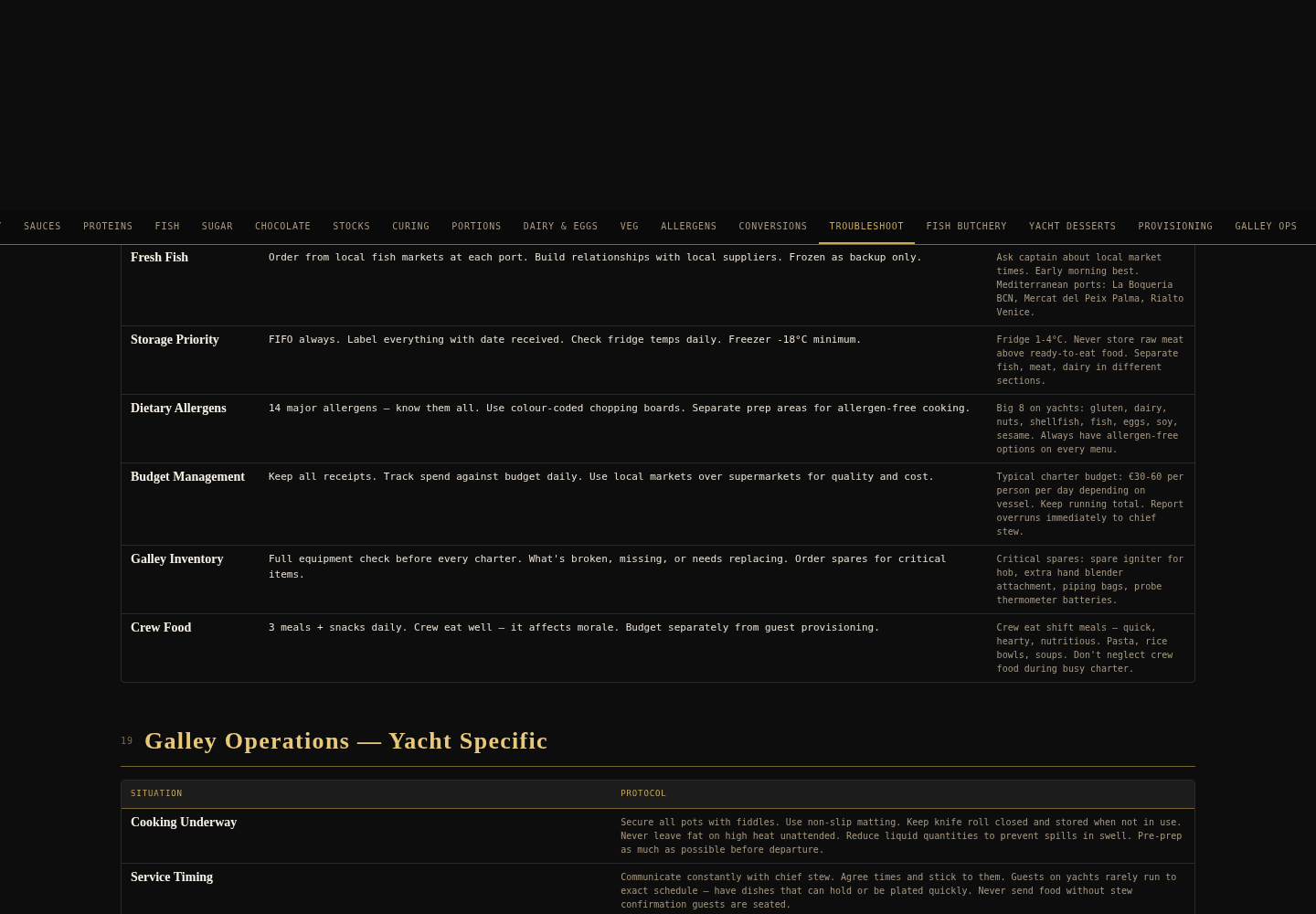
Galley Bible
How should that knowledge behave in a galley?
Gains: Context
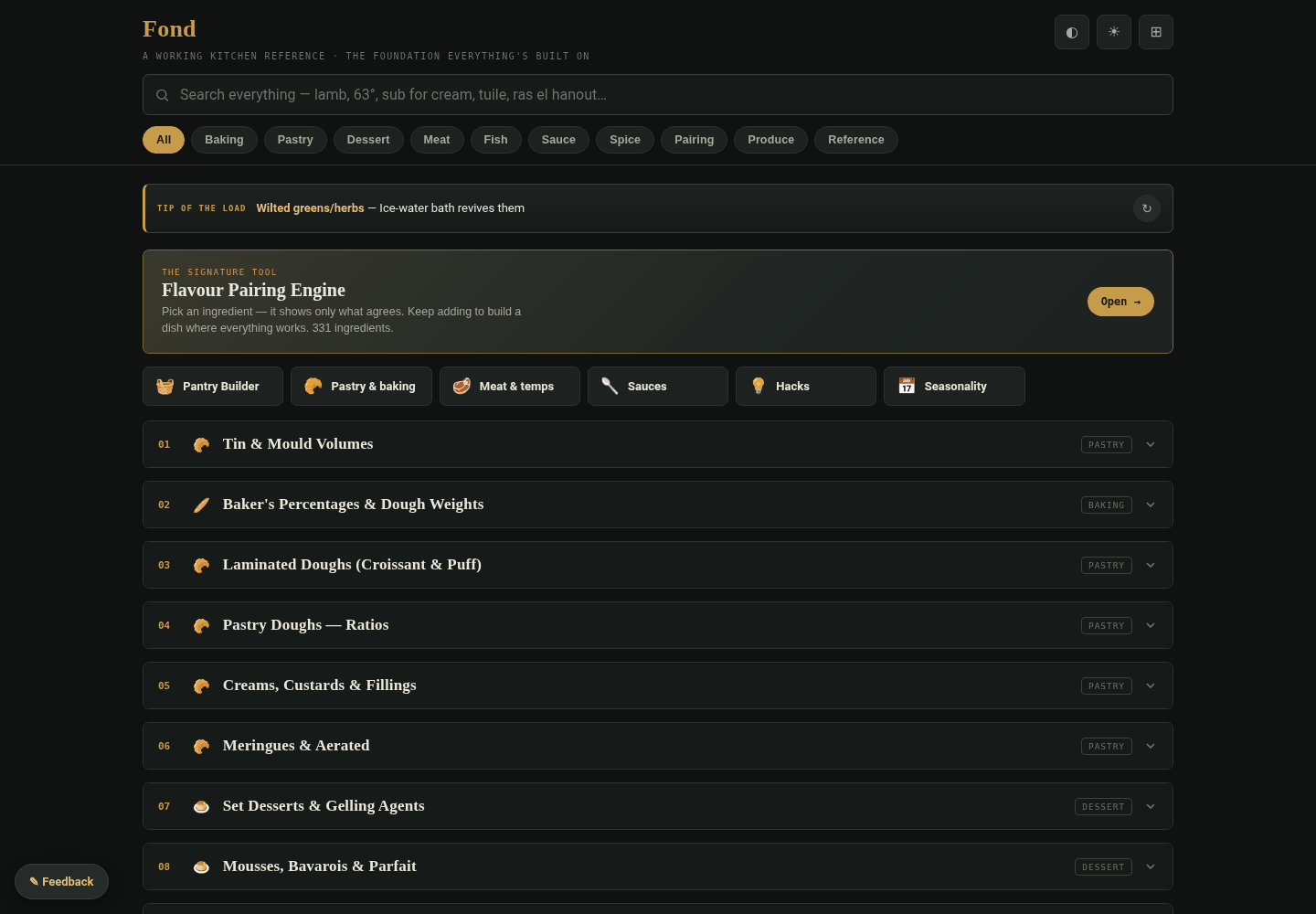
Fond
Can the reference respond to what the chef is doing?
Gains: Interaction
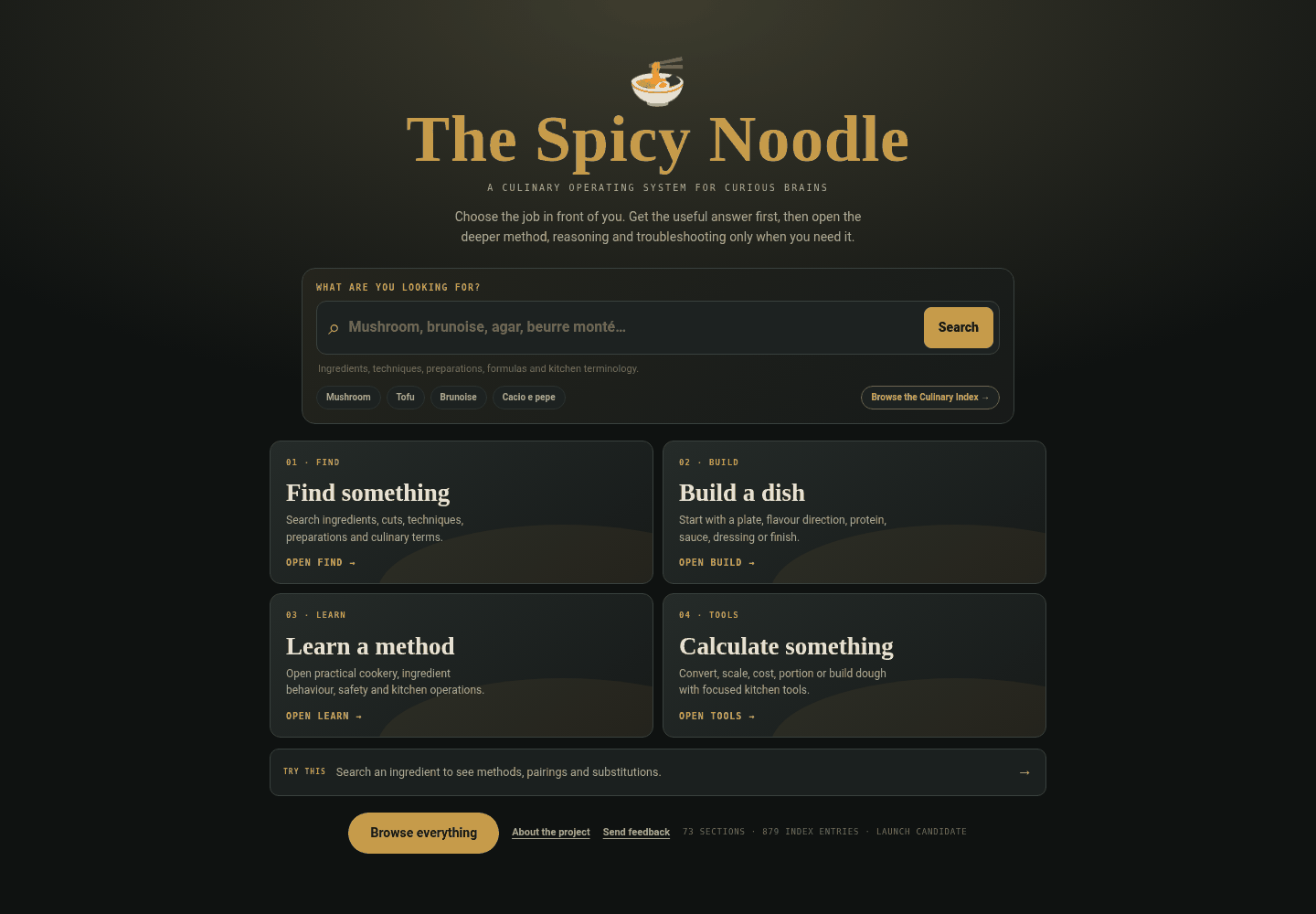
The Spicy Noodle
Can it organise around what the chef is trying to do, without becoming enterprise software?
Gains: Architecture
Culinary intelligence without administrative weight.
The Spicy Noodle is a chef's working recipe and knowledge system, organised around four things a person is actually trying to do: find, build, learn and use a tool.
A recipe should stay fast to enter, easy to read and comfortable to cook from. Relevant techniques and tools appear when the culinary context justifies them — costing, procurement and production accounting do not get forced into every recipe. That rule exists because an earlier build broke it.
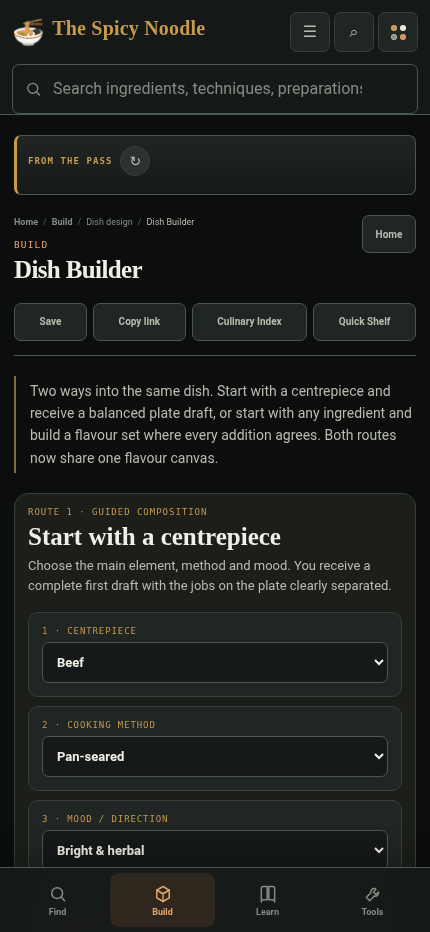
The Galley Bible, Fond, The Spicy Noodle and Scorcher Bay were built outside the scope of any job, on my own time. Every screenshot is an unedited capture of a preserved build.
Operational product design · Demonstration model
A different problem needs a different system.
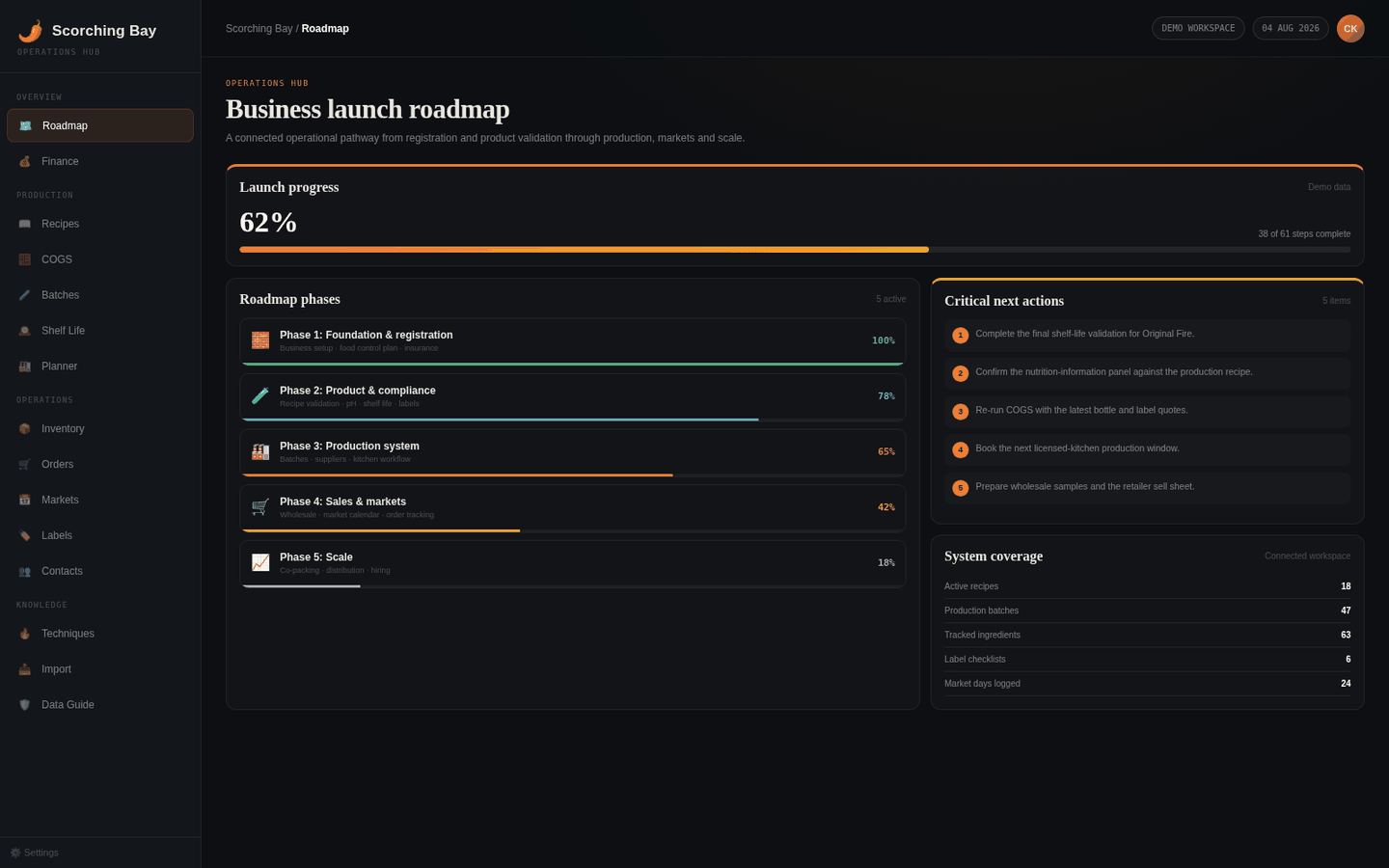
Scorcher Bay is a working model of the pathway from food-product idea to operating business: raw materials, batches, shelf life, costing, labels, compliance and planning, sequenced in the order the decisions actually arrive.
It was built to help a new entrepreneur meet the questions that decide whether a business survives — and to prompt them early, while the answers are still cheap to change. Cost sits beside the recipe. Shelf life is framed around what evidence would support the claim. Compliance is part of production rather than a surprise at the end.
It is a sample of what this kind of system can do and how far it bends. The pathway, thresholds and reference content are content, not structure: the same frame suits a brewery, a bakery or a central production kitchen.
A demonstration model, not a commercial product. Figures shown are demo data, and the compliance content needs specialist review before it is treated as authoritative.
Custom iterations
One system, shaped to one operation.
The Spicy Noodle is deliberately general. A working operation is not.
The more useful version of this work is a focused iteration built around one kind of operation — its equipment, its standards, its handover problem, its constraints. The underlying architecture holds; the content, vocabulary and priorities change.
Custom iterations for specific clients are the next step: developed with the operation rather than sold to it, on architecture that already exists.
The questions a custom build has to answer
- What knowledge is trapped in one person's head today?
- What must stay personal, and what must stay with the operation?
- Which data is too sensitive to centralise?
- What makes a handover genuinely useful rather than merely complete?
- Which standards should be templates, and which requirements?
- How should this behave offline, or on a poor connection?
A superyacht galley is the worked example I use to think this through: small team, constrained space, exacting standards, and culinary knowledge that leaves with the chef at every rotation. It is an illustrative case, not a client engagement.
How to start
Six clear ways to work together.
The offer is deliberately practical. Each engagement starts with a real operating problem and ends with something a team can use, test or make a decision from.
Six formats — audit, standards design, pilot, knowledge systems, product advisory, bid support
Operational audit
I watch the real work — production, handover, service and the last five metres — then map where information, ownership or timing breaks down. You keep the written findings and ranked priorities.
Production & standards design
Regeneration, assembly, SOPs, production flow or site standards designed around the equipment, team and language actually in use rather than a generic template.
Operational pilot
We agree the measure first, build the smallest intervention that could move it, test it in live service and decide from the result whether anything larger is justified.
Knowledge & handover systems
Turn inherited folders, apps, recipes and personal knowledge into a usable operational resource — especially where relief, rotation or staff turnover makes continuity fragile.
Chef-facing product advisory
For teams building culinary software: workflow research, terminology, data structures, interface critique, acceptance criteria and prototypes grounded in how chefs actually work.
Bid & mobilisation support
Culinary offer, production model, staffing shape, operational mapping and implementation thinking behind a bid — then the practical plan for bringing it online without months of avoidable firefighting.
The audit is the safest first step when the problem is not yet well defined. A pilot is the strongest next step when the outcome can be measured.
How I work
Observe. Map. Simplify. Build. Test. Embed. Measure.
Observe, map, simplify, build, test, embed, measure — the seven steps in full
Watch the real work rather than designing from assumptions.
Identify decisions, dependencies, handovers and failure points.
Remove fields, steps and rules that create no practical value.
Create the smallest system that makes the next action clearer.
Use it under real operational pressure.
Train, document and improve the adoption path.
Separate measured results from observed and inferred benefits.
First step
Let's map the bottleneck in your operation.
The most useful thing you can send me is the part that never quite works — the recurring problem everyone has stopped mentioning because it has always been like that. I am especially interested in complex culinary operations, chef knowledge and handover, private-service continuity and products that need real kitchen judgement.